October is one of the busiest months for state-to-state moves, and a good chunk of those moves run in the direction most people don't expect: not south toward warmth, but north, inland, or up into the mountains — New England, the Upper Midwest, the Rockies. If your car is coming from a mild climate and landing somewhere that's already seeing frost, or will be by the time it arrives, there's a specific set of things worth handling before the carrier ever loads it.
This isn't about shipping logistics — it's about making sure the vehicle you receive is actually ready for where it's landing.
Why the Destination Climate Matters More Than the Origin
When most people prep a car for shipping, they think about the car's condition at pickup. That's reasonable. But if your delivery address is in a place where temperatures are already dropping into the low 30s at night, your car needs to be ready for that environment from the moment it rolls off the carrier.
A car that's been sitting in southern California or coastal Florida for a year or two may have fluids, tires, and even a battery that aren't calibrated for genuine cold. The transport itself doesn't change any of that — it just moves the problem from a warm place to a cold one faster than you'd notice driving it yourself.
What to Check Before Pickup — With the Destination in Mind
Coolant Concentration
This is the one most people miss. Coolant (antifreeze) degrades over time, and its freeze-protection threshold drops with it. A car that's been running in a warm climate may have coolant that protects only to 20°F or so — fine for Atlanta, not fine for Minneapolis in November. Have the concentration tested before pickup. Most quick-lube shops can do it in a few minutes with an inexpensive tester. If it's marginal, flush and refill before the carrier arrives.
Tire Pressure and Condition
Cold air causes tire pressure to drop — roughly one PSI for every 10°F decrease in temperature. If your tires are already on the lower end at pickup, they may be noticeably underinflated when the car is delivered into a colder climate. Check pressure before shipping and inflate to the manufacturer's spec or slightly above. Also look honestly at the tread: if you've been running all-seasons that are getting thin, a cold wet road is not the moment to discover that.
Battery Health
Cold weather is hard on batteries. A battery that starts a car without complaint in warm weather can struggle or fail outright when temperatures drop. If your battery is more than three or four years old, have it load-tested before shipping. Replacing it before the car ships is significantly easier than dealing with a no-start on delivery day in an unfamiliar place.
Windshield Washer Fluid
Drain whatever diluted summer fluid is in the reservoir and refill with a winter-rated fluid rated to at least -20°F. This takes five minutes and costs almost nothing. It's also the kind of thing that feels completely unnecessary until the moment it isn't.
Wiper Blades
If the blades are streaking or chattering in good weather, they won't improve in cold or snow. Swap them before pickup if they're overdue — or at minimum throw a new pair in the trunk so they're there when you need them.
A Note on Enclosed Transport for Cold-Climate Deliveries
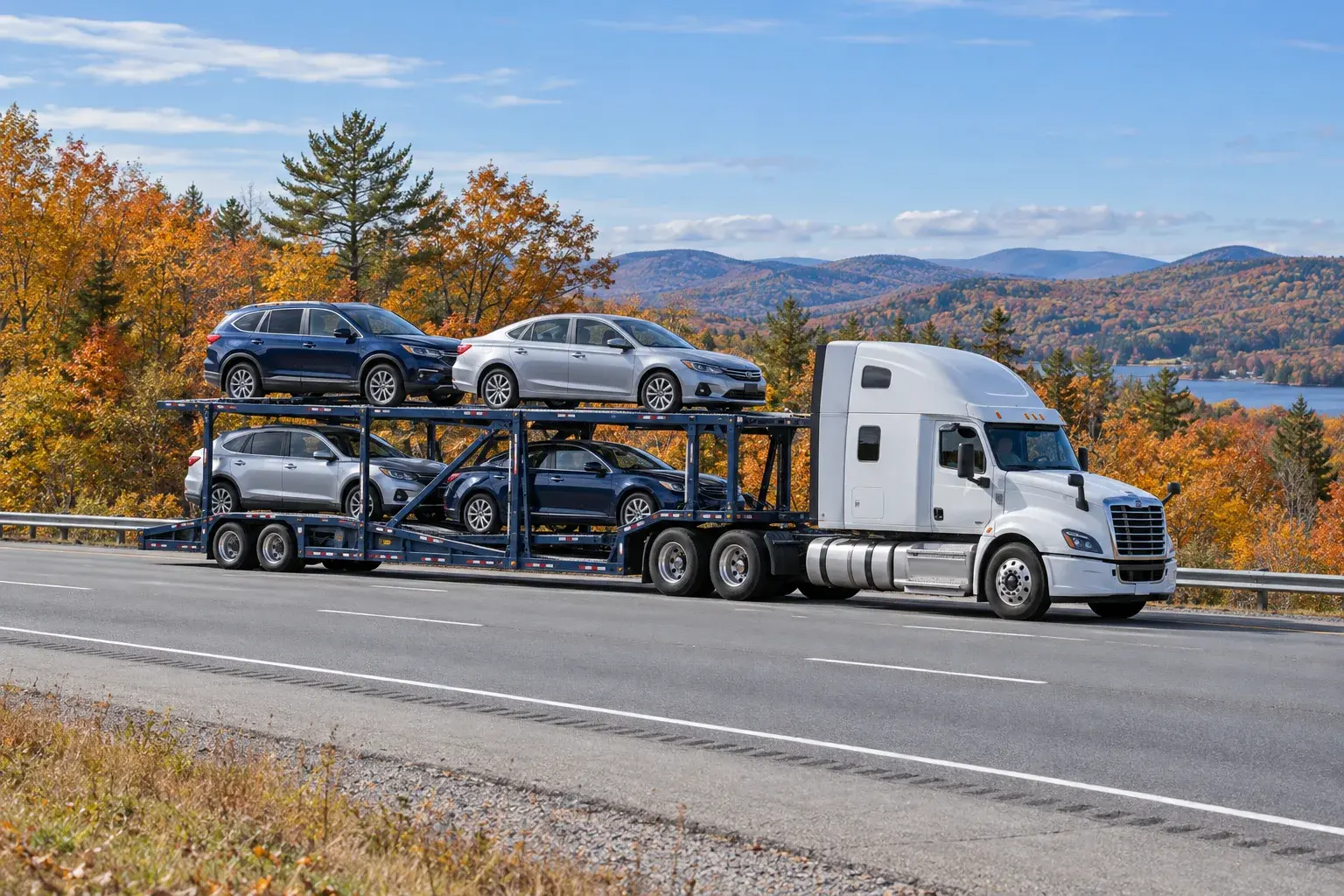
If you're moving a vehicle into a region that's already seeing early snow or ice, enclosed car transport is worth considering — not just for protection from the elements during transit, but because enclosed carriers are often better equipped to handle tricky winter delivery conditions. It won't change what the weather does after delivery, but it does give the vehicle a cleaner start.
For most standard vehicles making a fall move, open car transport is still a practical and cost-effective choice. The preparation steps above apply equally in either case.
Timing Your Shipment Around the Weather Window
Fall shipping demand picks up sharply in October and stays elevated through November as snowbirds head south and relocations compress before the holidays. If you're moving toward cold rather than away from it, you're swimming against the primary traffic — which can sometimes mean better carrier availability on your lane, but it's not guaranteed.
The most useful thing you can do is avoid locking yourself into a rigid delivery date. Build a two-to-three day window on the delivery end if your situation allows it. That flexibility gives dispatchers room to match you with a carrier whose route actually fits, which tends to mean a smoother experience overall. Our car shipping cost calculator can give you a ballpark for your route, and an advisor can walk through timing considerations specific to where you're headed.
Don't Save the Prep for After Delivery
The temptation when you're in the middle of a move is to handle vehicle maintenance once everything settles down. That's understandable — but the week after a move is usually the week you most need a reliable car. Doing the cold-weather checks before the carrier picks up means the car is ready to work the moment it arrives, not two service appointments later.
Get a free quote and let an advisor help you think through the timing and transport type for your specific move.
For cross-country shipments heading into northern climates, this kind of advance prep is one of the few things entirely within your control. It's worth the hour it takes.
GET YOUR FREE QUOTE
Tell us your route and vehicle. An advisor confirms the details.