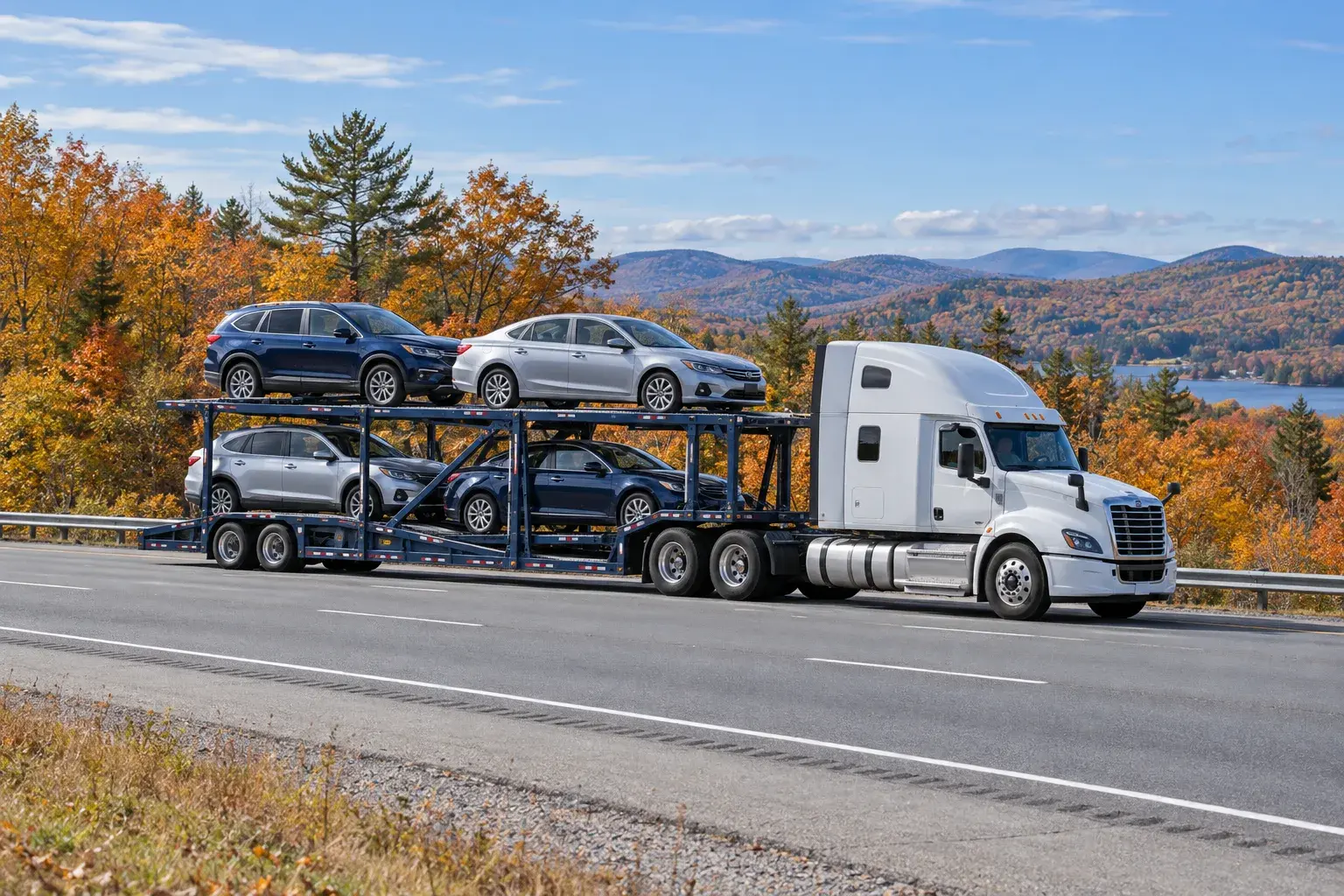
Late October sits at one of the most underestimated inflection points in the auto transport calendar. Snowbird season is already accelerating. Holiday travel is six weeks out. Winter weather is starting to close certain northern routes. If you're thinking about shipping a car anytime between now and early December, the decisions you make in the next week or two matter more than most people realize.
Here's what's actually happening in the market right now, and how to use it to your advantage.
Why Late October Feels Different From the Rest of Fall
For most of September and early October, carrier capacity and demand are reasonably balanced. Snowbird moves have started, but the volume hasn't peaked. By late October, that changes fast.
A significant number of snowbirds — particularly those heading from the Northeast and Midwest to Florida, Arizona, and the Carolinas — target departure windows between late October and Thanksgiving. They're trying to be settled before the holidays, which is a completely reasonable goal. But it means southbound lanes on major corridors get competitive, and carriers who had flexibility a few weeks ago start filling their loads more quickly.
At the same time, college students heading home for Thanksgiving, people wrapping up job relocations before year-end, and buyers completing online vehicle purchases all add to the mix. The window between Halloween and Thanksgiving is genuinely one of the busier stretches of the auto transport year — and it compresses quickly.
What This Means for Pickup Timing
If your goal is a delivery before Thanksgiving, work backward from the holiday, not forward from whenever you feel ready.
A standard open carrier shipment on a mid-length route — say, New England to the Southeast — typically takes one to four days in transit once the carrier is assigned. But carrier assignment itself can take a few days to a week, sometimes longer depending on your specific origin and destination. Add a buffer for weather-related delays, which are increasingly likely as November approaches in northern states.
That means if you need the car at your destination by November 26, you should be looking to have a booking confirmed and a pickup window ready by mid-November at the latest — ideally sooner. Waiting until the week before Thanksgiving to begin the process is how people end up with their car arriving in December.
Practical rule: Decide on your transport date before you finalize your travel plans, not after. The carrier schedule doesn't adjust to your flight.
The Enclosed vs. Open Question Gets More Relevant Now
For most shipments, open car transport is the right call — it's the most widely available option and handles the vast majority of vehicles without issue. But as weather deteriorates through November, some customers with higher-value vehicles, freshly detailed cars, or vehicles with known paint sensitivity start weighing enclosed car transport more seriously.
Enclosed carriers have smaller capacity and tend to book further out, which matters when the overall market is tightening. If enclosed is the right fit for your vehicle, late October is the time to have that conversation — not after you've already watched the available windows shrink.
Route-Specific Considerations Worth Knowing
Not all routes behave the same way this time of year.
- Southbound from the Northeast: High demand, carriers fill quickly. Book early if you're heading to Florida, Georgia, or the Carolinas.
- Midwest to the Sun Belt: Similar pressure, with the added factor of weather on the northern pickup end closing in faster.
- West Coast routes: Generally more stable in late fall, though northern mountain routes (Pacific Northwest, Rockies) start seeing weather complications.
- Inbound to the Northeast: Counterintuitively, northbound capacity can actually loosen up as snowbird season peaks, since carriers are eager to deadhead back south. If you're shipping to New England right now, that can work in your favor.
For customers shipping cross-country, weather at both ends of the route matters, not just at pickup. Ask your advisor about what conditions look like along the actual carrier corridor.
How to Use the Cost Calculator Before You Call
If you're still in planning mode and want a ballpark before committing, the car shipping cost calculator is a useful first step. It won't generate a locked-in price — carrier availability and route conditions affect the final number — but it gives you a reasonable range to budget around before you talk to an advisor.
The Bottom Line
Late October is not a bad time to ship a car. It's a time that rewards planning. The customers who have smooth experiences over the next six weeks are almost always the ones who started the conversation a week or two earlier than felt strictly necessary.
If you have a target date in mind, Get a free quote and let an advisor look at your specific route and timeline. The earlier that conversation happens, the more options you'll have.
GET YOUR FREE QUOTE
Tell us your route and vehicle. An advisor confirms the details.