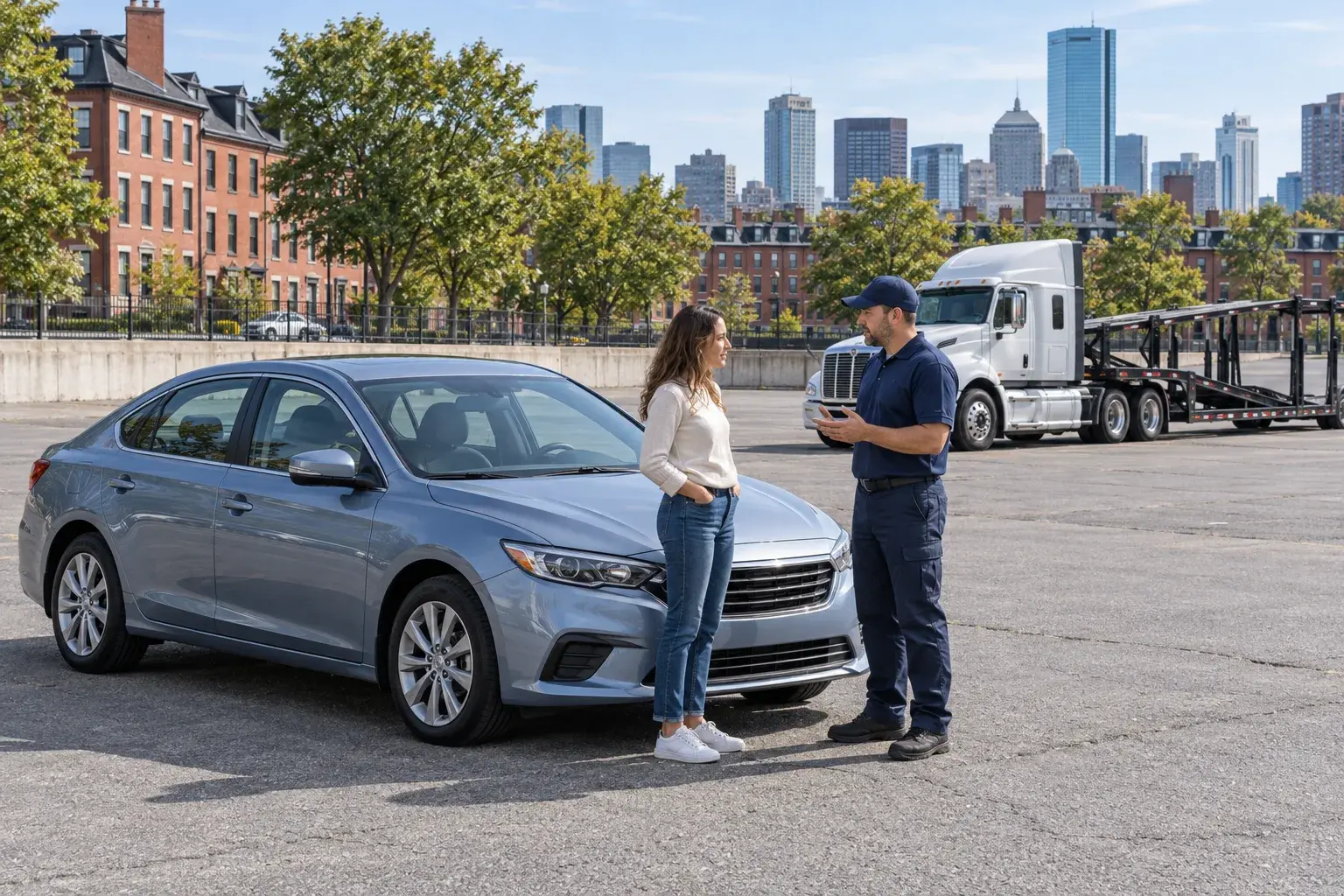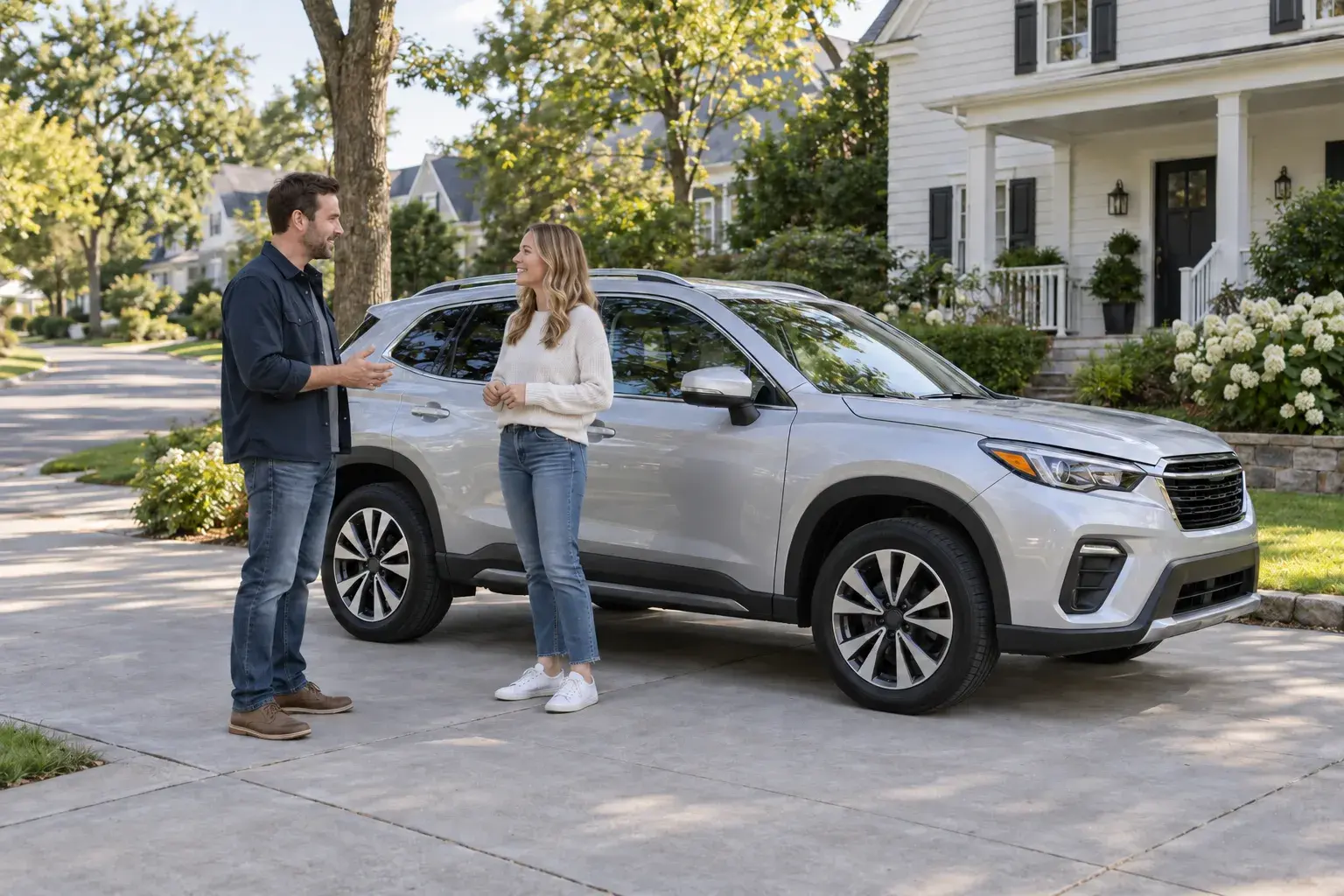
Most people picture door-to-door transport as the carrier pulling directly into their driveway, loading the car, and driving off. That's often exactly what happens. But sometimes the road between the carrier and your vehicle has a real obstacle — a low bridge, a narrow residential lane, a gated entrance with no commercial vehicle access, or a dense urban block where a 75-foot hauler simply cannot turn around safely.
This isn't a rare edge case. It comes up regularly in older New England neighborhoods, dense apartment districts, and rural routes with unpaved or weight-restricted roads. Knowing how carriers and coordinators handle it — before it catches you off guard — makes the whole process easier.
Why Carriers Sometimes Can't Reach the Door
Auto transport carriers use large multi-car haulers. These are long vehicles with real turning radius and clearance requirements. A few common access issues:
- Low-clearance bridges or overpasses on the route to your street
- Narrow residential roads that can't accommodate two-way traffic alongside a hauler
- Gated communities where commercial vehicle access is restricted or requires advance authorization
- Apartment complexes or condo properties with private driveways or underground garage configurations
- Unpaved or soft-surface driveways that can't safely support the weight of a loaded carrier
None of these mean your shipment can't happen. They mean pickup needs a small adjustment.
What Actually Happens in These Cases
When a carrier flags an access concern — either in advance during route planning or when they arrive and assess the situation — there are a few practical solutions.
Meet at a Nearby Open Lot
The most common workaround is driving your car a short distance to a location the carrier can safely reach. Large parking lots — a grocery store, a Home Depot, a church parking lot on a weekday — work well. The carrier loads your vehicle there, and you arrange a ride back. It adds maybe 20 minutes to your morning and solves the problem cleanly.
When you book, mention any known access concerns at your address. Your Dreamline advisor can flag this for the carrier in advance so they're not discovering it when they arrive. That conversation at booking is much easier than coordinating a last-minute change with a driver who's on a tight schedule.
Relay Points for Long-Haul Routes
On cross-country shipments, some routes involve a relay — where one carrier handles the first leg and a second carrier picks up at an intermediate hub. This is more common than people realize on certain corridors, and it's not inherently a problem. What matters is that handoff documentation is clear, the vehicle condition is logged at each transfer, and you know who your contact is at each stage.
If a relay is part of your shipment, ask your coordinator how it's tracked and who holds the bill of lading at the handoff point. Those are the right questions.
Expedited or Smaller Carrier Options
For addresses that consistently present access problems, a smaller single-car or two-car carrier can sometimes reach locations a full hauler cannot. This option typically costs more and requires more lead time to arrange, but it's worth discussing if your location is genuinely difficult. If you're shipping a high-value vehicle and access is constrained, enclosed car transport on a smaller transporter may solve both the access and protection concerns at once.
How to Prepare When You Know Access Is Tricky
- Mention it at booking. Don't wait for the carrier to discover the problem on pickup day. Describe the constraint — low bridge, gate code, narrow lane — so it can be factored into carrier matching and routing.
- Identify your nearest open lot in advance. Know where you'd meet a carrier if they can't reach your address. A half-mile drive to an accessible lot is no hardship if you've already thought it through.
- Confirm gate codes or HOA access procedures. If your community has restrictions on commercial vehicles, check whether there's a delivery window, a required permit, or a designated entry point. Relay that to your coordinator before pickup day.
- Be reachable on pickup day. Even well-planned pickups sometimes require a quick real-time decision. If the carrier calls with a question about access, picking up promptly prevents a missed pickup window.
Door-to-door transport means the carrier gets as close to your door as road conditions and vehicle safety allow — not necessarily into your driveway. Understanding that distinction makes the experience much smoother.
What to Ask When You Get Your Quote
When you request a quote, describe your pickup and delivery addresses accurately. If either location has a known access issue, say so. Your Dreamline advisor can confirm whether standard door-to-door service covers your situation or whether a small adjustment to the plan makes more sense from the start.
For shipments involving unusual routing — rural destinations, dense urban areas, or locations requiring relay handling — cross-country car shipping planning conversations are worth having early rather than late.
Access logistics are solvable. They just work better when they're on the table before pickup day rather than discovered at the curb.
Get a free quote and let us know your pickup and delivery details — including any access considerations — so we can match you with the right carrier from the start.
GET YOUR FREE QUOTE
Tell us your route and vehicle. An advisor confirms the details.