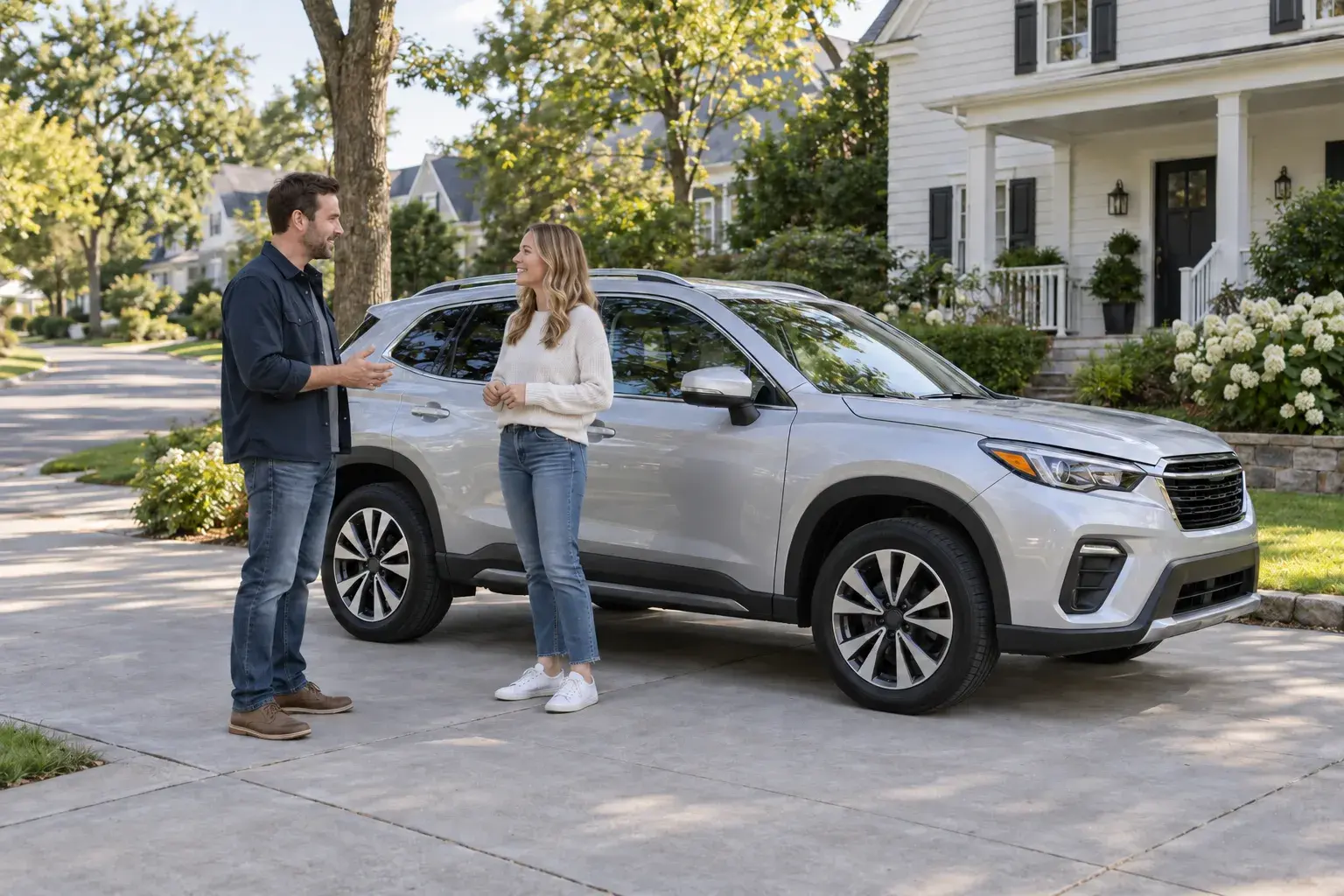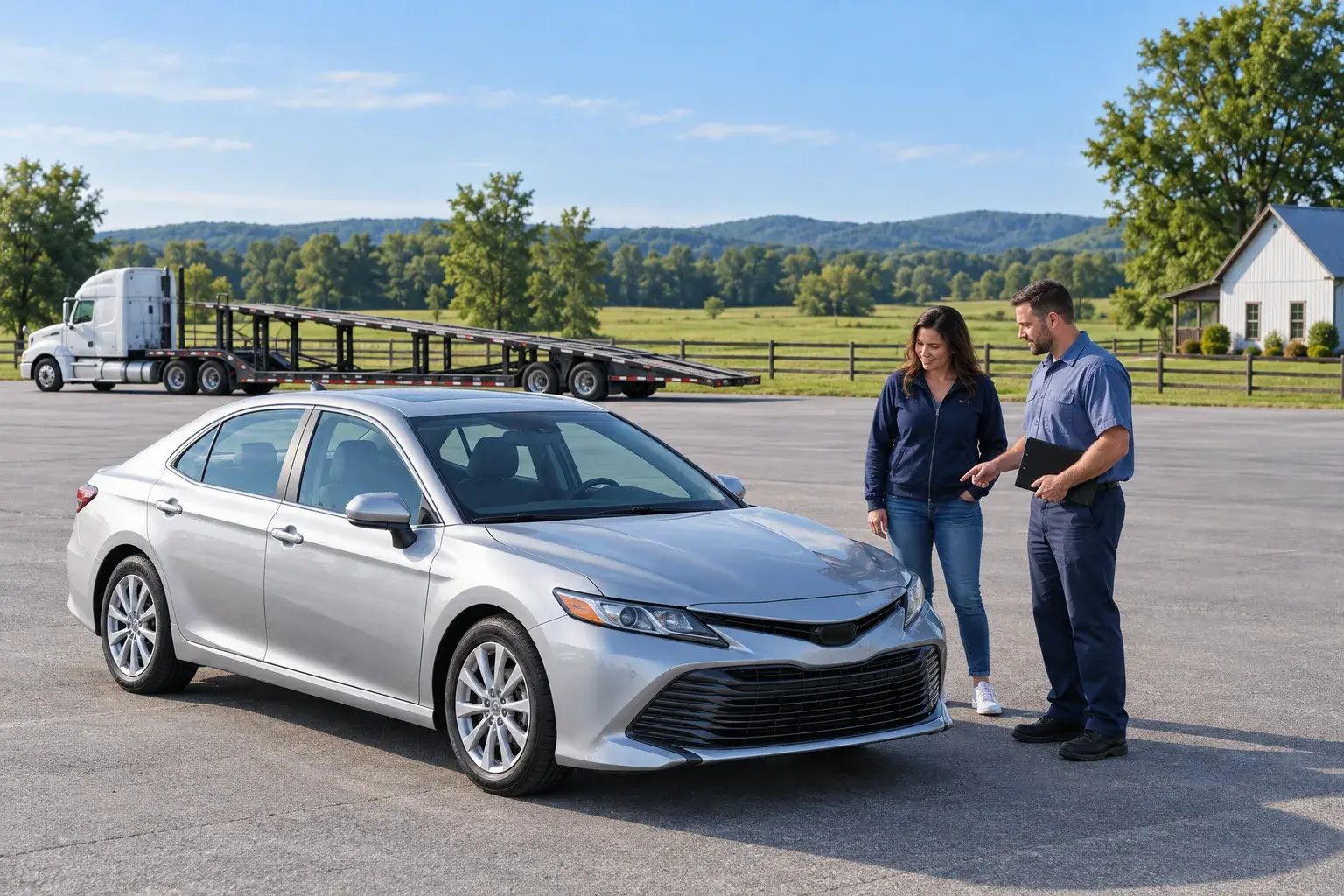
Door-to-door car shipping means planning pickup and delivery as close to your requested addresses as safe and legal access allows. It does not guarantee that a large transport trailer can enter a gated community or reach the end of a driveway.
Check access before pickup day
Tell your shipping advisor if the vehicle is behind a gate, inside a garage, or at the end of a private road. Explain any known restrictions without guessing measurements. If access is uncertain, ask the driver to review the location before agreeing on a handoff.
- Gates: clearance, visitor registration, and permission for commercial vehicles.
- Roads: width, tight turns, overhead branches, slopes, and weight restrictions.
- Loading space: room for the truck to stop and unload without blocking traffic.
- Community rules: permitted hours and any restrictions on vehicle loading.
- Driveways: surface condition, turning space, and a safe exit for a long trailer.
A property manager or HOA can explain community rules. The carrier determines whether the proposed loading location works for its equipment. Permission to enter does not by itself establish that a trailer can safely maneuver there.
Agree on a meeting point when access is restricted
If the address is unsuitable, discuss a nearby location with enough space for the truck and loading activity. Obtain permission where required and confirm that stopping and loading are allowed. Do not assume a shopping-center lot or public road is automatically available.
Confirm the exact meeting location, who will bring the vehicle there, and how they will get home afterward. A map pin can reduce confusion, but share it directly with your advisor or driver rather than in a public review or comment.
Coordinate keys and contacts
Choose an authorized person who can meet the driver, inspect the car, and complete the handoff paperwork. Give them the agreed location and the driver's contact instructions. If you are flying out, avoid leaving the only set of keys inside a locked house or with a building office that closes before the pickup window.
Share gate access details privately through the agreed contact channel. Ask how schedule updates will be communicated and what to do if the person releasing the vehicle becomes unavailable.
Non-running vehicles need a different access plan
If the car cannot be driven to a meeting point, tell your advisor before booking. Explain whether it rolls, steers, and brakes. Moving a non-running car out of a garage or down a private driveway may require a separately arranged local service; it should not be assumed to be included in the carrier quote.
For a low-clearance vehicle, discuss ramps and loading equipment as well as road access. An enclosed carrier still needs a suitable place to load.
Apply the same checks at delivery
For seasonal moves, verify that someone can enter the destination property and receive the vehicle even if it arrives before you do. Read our snowbird shipping guide for coordinating flights and return trips.
Our door-to-door transport guide explains how accessible handoffs work. Get a free quote and mention gates, driveways, and building restrictions when planning your shipment.
GET YOUR FREE QUOTE
Tell us your route and vehicle. An advisor confirms the details.